
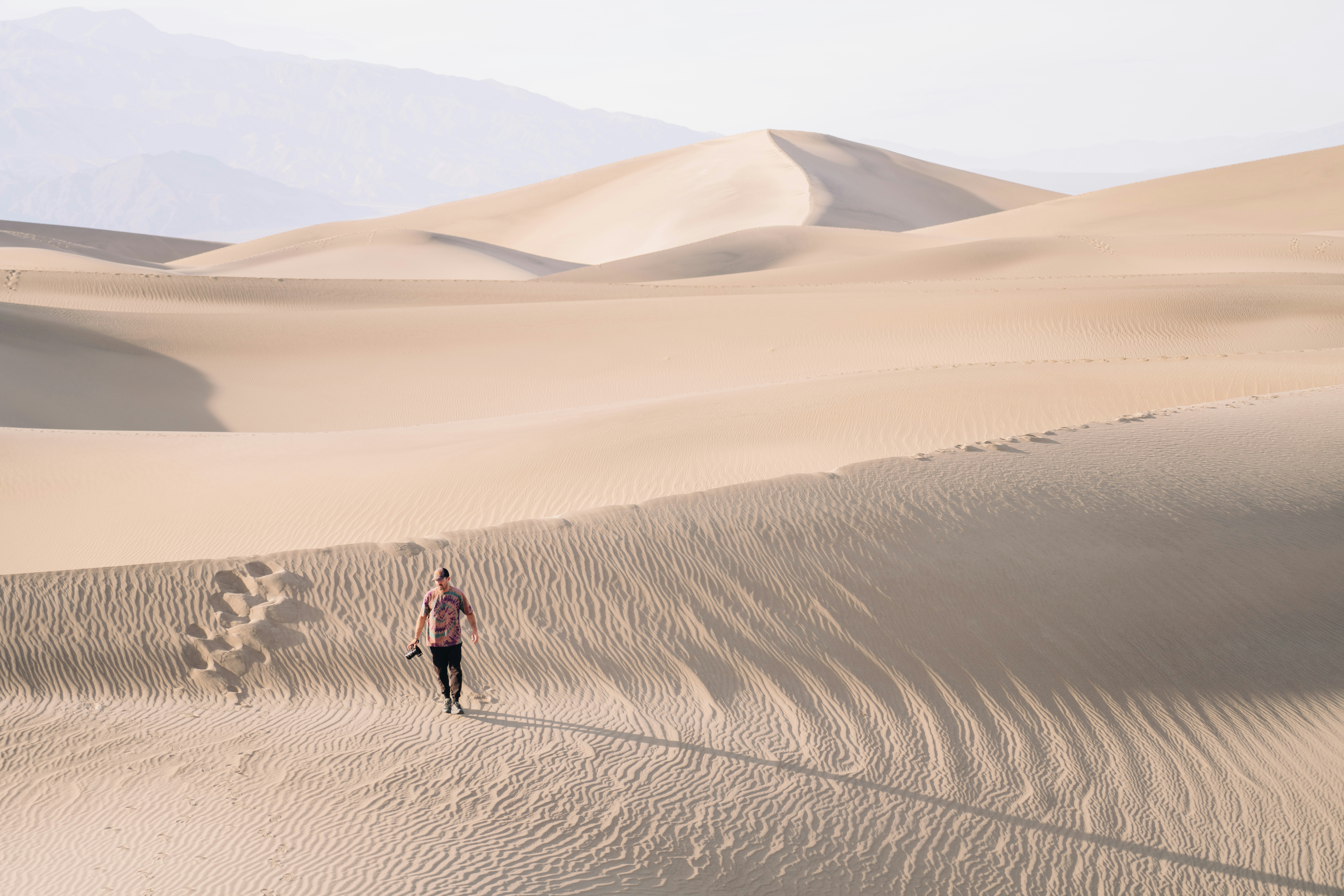

It seems a bit overrated at this point that Israel conjures up the mental image of a hot and dry desert. Naturally, a semi-arid climate marked by sparse vegetation comes to mind.
This impression is mainly due to the Negev Desert, which covers a large part of the country. However, that typical Middle Eastern sandy and rocky terrain would be an oversimplification. In reality, Israel’s climate differs by region. This means there is a lot more to the Mediterranean warmth than the default image of a ‘scorching desert.’
Now that we have somewhat addressed the elephant in the room, are fears of sunburn on Israel’s hiking trails justified? Yes, absolutely, especially in certain areas during the summers. Israel’s weather has had quite a few surprises in store these past few years.
The Jerusalem Post mentioned, almost casually, how 2025 was the fifth-hottest year on record. With only 55% of the average rainfall, northern Israel took the brunt. So, hikers need to be mindful of sunburn. However, it isn’t going to be as straightforward as ‘wear a hat and find some shade.’
This article will provide you with a smarter approach, which doesn’t involve just avoiding the sun. With this guide, you will be able to design your hike based on the interaction of light, terrain, and timing. So, buckle up to view summer hiking across Israel from an entirely different lens.
Longer Hikes May Not Always Be Harder Hikes

Have you ever looked at a hiking trail of, say, 8 kms and thought, “Okay, that seems manageable.” Well, a lot of us have, unless it’s a place like Israel, where numbers can be wildly misleading.
Just think about it: A shorter route in full sun may feel like a slow roast, whereas a longer trail with even slight variations in shade can feel surprisingly easy. This difference holds even for individuals with the same fitness level.
A 2024 report revealed that over 90% of heat-related illness cases began outdoors during exposure to high temperatures. Given this reality, you need to change your question. Don’t ask how long the hike is, but how much of it will be spent under direct sunlight. Better yet, consider the following combination:
- The number of hours under direct sunlight, which adds up faster than the distance
- The type of terrain, since desert rocks and sand bounce heat back at you
- The frequency of breaks, since a complete lack of shade or rest offers no real recovery
- Mental fatigue, caused by constant glare and heat, which can suck your energy
Time and Distance Required to Get to the Trail Matters
Again, keep in mind that oversimplification is not the name of this game. A hike, especially one in Israel, doesn’t begin at the trailhead. It starts the moment you leave your room. A long queue in the sun or a delayed bus can drain your energy before you’ve even begun your hike.
Then, once you’re overheated or slightly dehydrated, everything on the trail feels more challenging. Planning the hiking route itself is important, and most travelers ace it. However, many brush aside the route leading up to it. Even a “short” 20-minute walk to the trailhead can lead to last-mile exposure.
In many countries, travelers in such cases would rely on convenient ride-hailing apps. That expectation may not hold in Israel since services like Uber are not widely available. On that note, many international hikers are also learning the importance of not relying on a single app-based solution.
Can ride-hailing be unpredictable? Yes, and the Uber lawsuit filed predominantly in the US has revealed a more somber side of the story. The central allegation concerns the company’s failure to implement adequate safety measures and conduct background checks.
As TorHoerman Law shares, over 3,200 lawsuits have been filed by individuals who Uber drivers sexually assaulted. At least when one is heading into the outdoors or less populated areas, ride-hailing may not be the best option. Since hikers in Israel may not have this option at all, what to do? The following can be a good way to avoid sunburn up to the trailhead:
- Public buses, which form the backbone of travel across Israel
- Local taxis that are most useful during the early hours of the day
- Shared taxis that are usually more affordable than private ones
- Car rental services that may be the most flexible option for remote trailheads
To Read the Map or the Landscape?
In the world of hiking, a map has almost become a trophy meant to be flaunted. Open it at the earliest and look for the obvious three: distance, elevation, and route markings.
Is there something relevant to our context that a map cannot tell you? Well, yes, you cannot know exactly how a trail feels at 12:30 PM under the biting sun’s gaze. That’s because the landscape’s interaction with light and heat is unknown to maps.
Before you believe this is just about comfort, think again. As per a 2024 climate study, outdoor environments are steadily reaching levels of ‘uncompensable heat stress.’ This refers to the level at which the body can no longer cool itself effectively during activity. The terrain around you, which includes shade and wind flow, will affect your body one way or the other.
It doesn’t help to know that during the 2025 severe heat wave, temperatures reached nearly 50°C in areas like the Jordan Valley and Aqaba. Not only that, but Israel recorded a staggering 36°C overnight low in Sedom. When nights stay that hot, the body doesn’t get a chance to recover from daytime sun exposure. Even a moderately difficult hike can become deeply taxing.
So, you need to develop a smarter habit of reading your hiking routes. Here’s how you can think differently:
- Observe the type of terrain instead of just the distance. So, note if there are ridges, low valleys, or open plains.
- Make note of the elevation, but keep the context in mind. For instance, low-lying areas near the Dead Sea in particular trap a lot of heat. At the same time, a higher trail could feel cooler due to airflow.
- See how broken or continuous the terrain is. The latter will point towards the dreaded prolonged sun exposure.
- Match the route with the time of the day. It’s important to know what the terrain is likely to be during noon or the peak sun exposure hours.
- Notice the vegetation patterns, as a single tree line or scrub zone can mean cooler conditions or intermittent spots for shade.
Clothing Should Be a Part of the Strategy

Did you know that 44.6% of all adults in Queensland experienced sunburn in 2024? What’s even more shocking is that these mainly included people living in the most advantaged areas. That’s the case despite awareness in one of the most developed regions of the world.
Now, coming to Israel, the 2024-2025 real-time UV index showed ‘very high’ to ‘extreme’ levels for different parts of the country, especially during the summer. This makes sun exposure even more intense, regardless of how short the outdoor trip is. People from the Queensland report were religiously applying their sunscreens, and yet, we know the stats.
This means we must go back to the beginning: Just wearing a hat and finding some shade, or in this case, applying the right sunscreen, won’t help. That doesn’t mean clothing cannot be a part of your strategy to avoid sunburn on hikes across Israel. In fact, it can become a way of controlling the speed at which your body loses energy.
Most people’s hiking clothes are optimized for the first 30 minutes. So, it feels hot, and they dress in fewer layers. A couple of hours in, and this strategy leads to greater sweating and faster loss of energy. So, what choices can change the experience? Take a look:
- Cover certain areas of your body strategically. These would include the high-exposure zones like the neck, shoulders, and forearms.
- Select loose, breathable layers in natural fabrics that maintain airflow on bare skin.
- Use clothing as a portable shade, so go for long sleeves or light overshirts.
- Stay protected against reflected heat, which means keep legs and arms covered too.
Finally, it isn’t half as much about the sun as it is about where you are standing under it, and for how long. For instance, a trail in the shaded valleys of the north can feel completely different from a route in the Negev or the Jordan Valley.
Start thinking of hikes in terms of regional differences, and you won’t view them as simple lines on a map. When all is said and done, basics do matter. If the sun is strong, a hat is still a hat, so wear it.
However, by now, you already know the more interesting and less straightforward truth. So, the next time you wear a hat, take a bow on the trail, knowing that you are not relying on obvious advice.


